


AMD Ryzen 9 9000 Series Processors
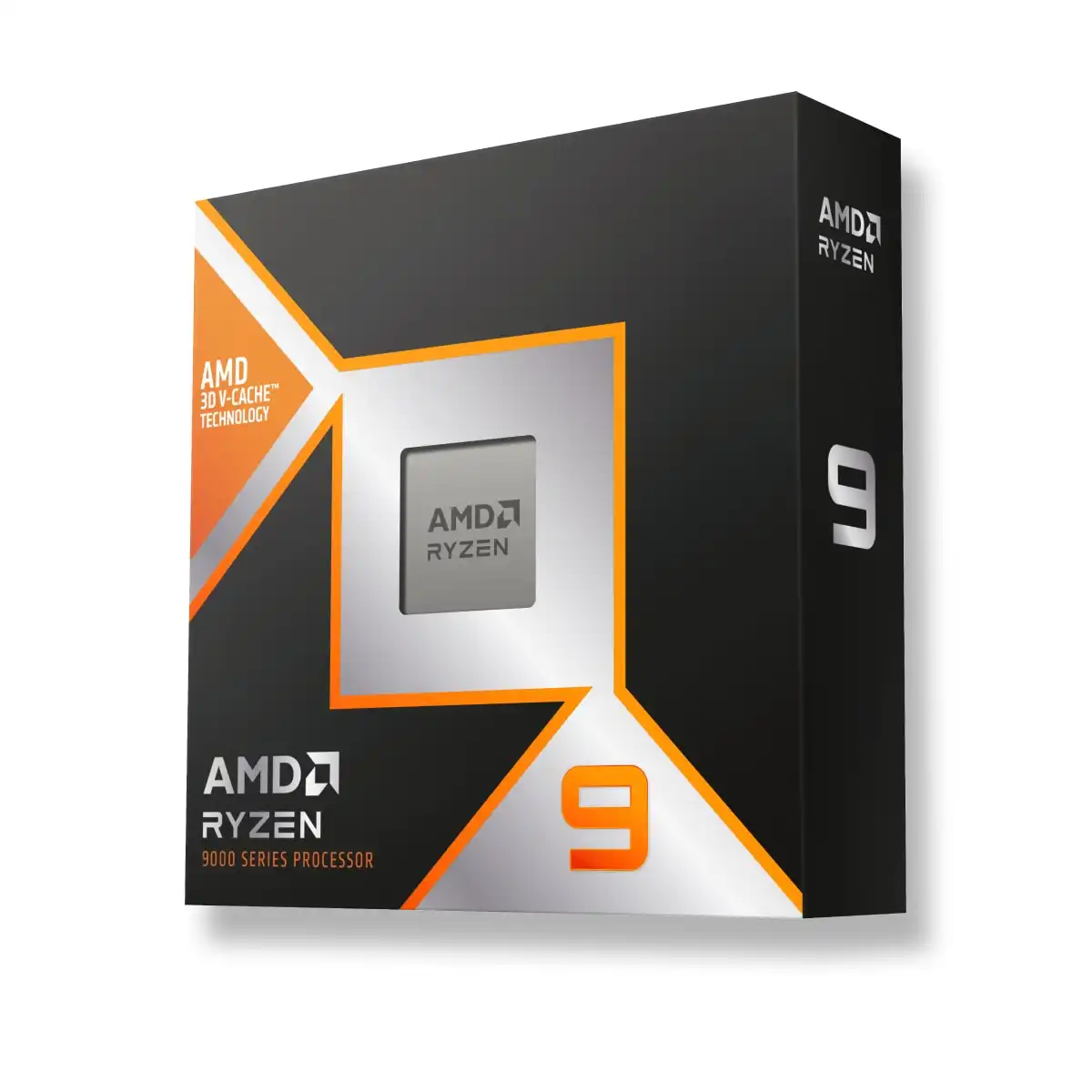
AMD Ryzen 9 9950X3D Processor
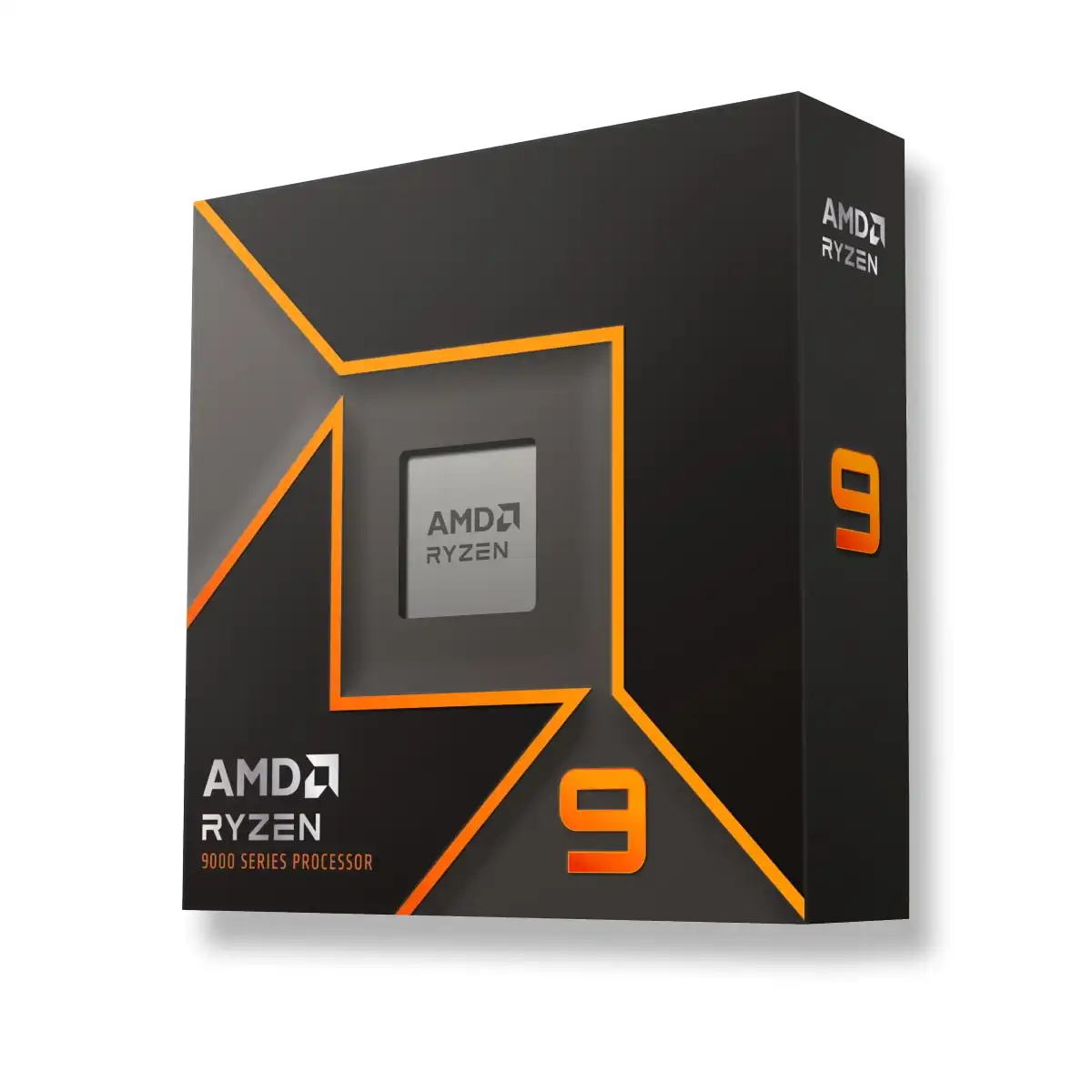
AMD Ryzen 9 9950X Processor
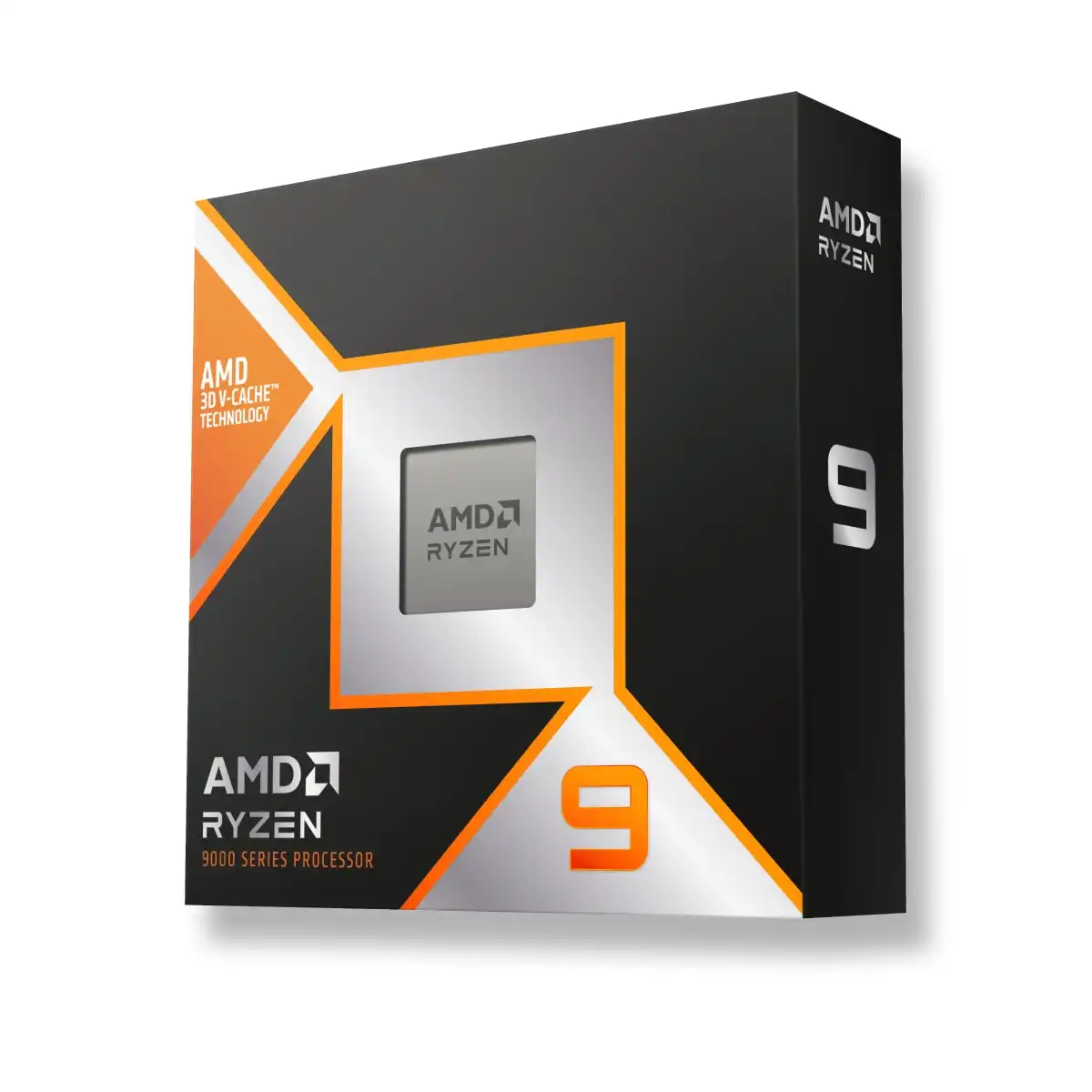
AMD Ryzen 9 9900X3D Processor
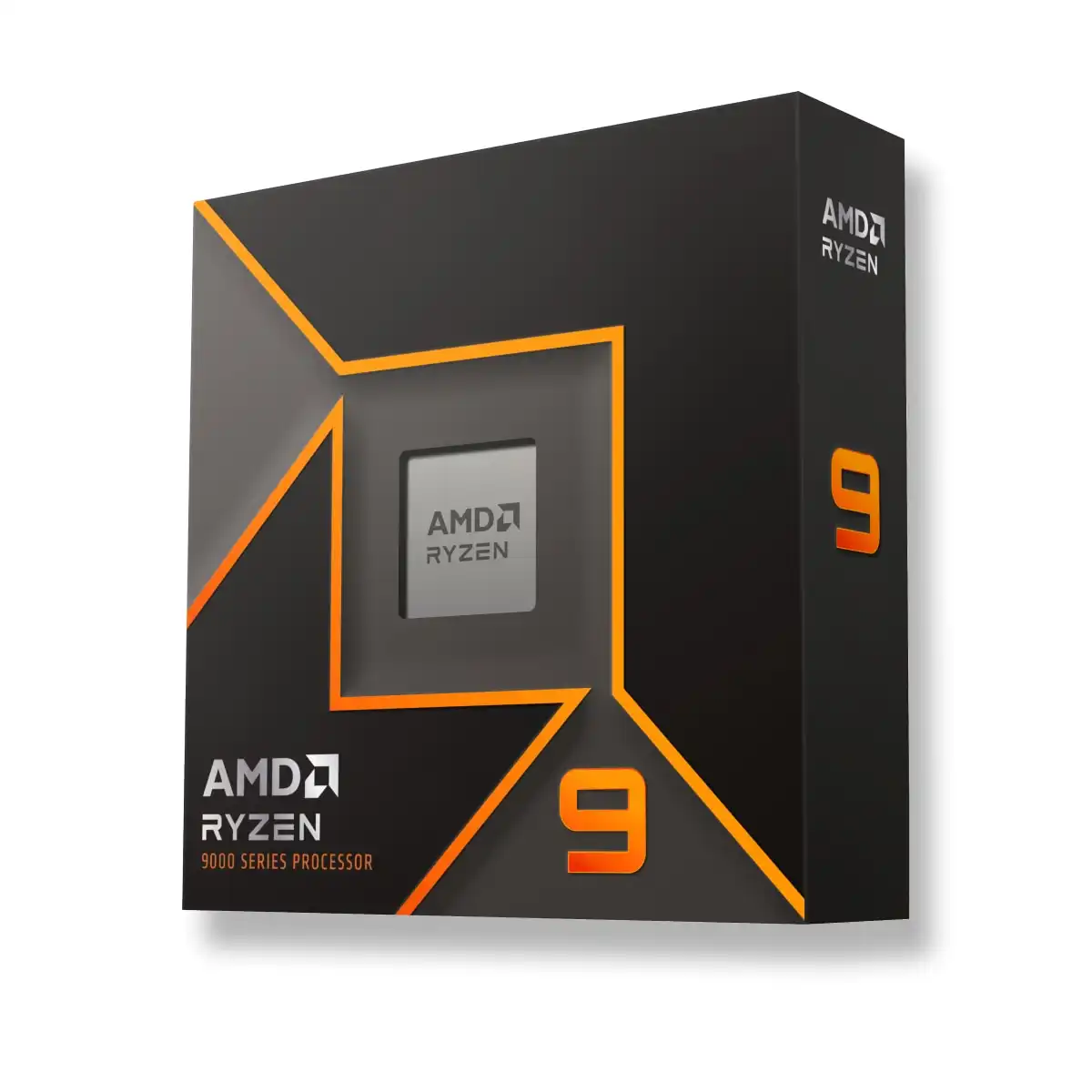
AMD Ryzen 9 9900X Processor
The Ryzen 9 9000 Series chips here are AMD's Zen 5 desktop processors for the AM5 socket. The 16-core, 32-thread Ryzen 9 9950X and Ryzen 9 9950X3D boost up to 5.7 GHz at a 170 W TDP. The 12-core, 24-thread Ryzen 9 9900X (up to 5.6 GHz) and Ryzen 9 9900X3D (up to 5.5 GHz) are rated at 120 W. All four have basic integrated Radeon graphics and come without a cooler. AMD covers them with a 3 year warranty.
Choosing between them comes down to two questions. First, X3D or not: the 9950X3D and 9900X3D add stacked 3D V-Cache, which mainly helps games, so they suit gaming rigs that also stream or edit. The plain 9950X and 9900X suit rendering, video export, code compiles and other multi-core work. Second, 16 or 12 cores: the 9950 models pay off in heavily threaded workloads, while the 9900 models run cooler and are easier on the motherboard and power supply. Budget for a cooler, since none is in the box. A 360 mm liquid cooler or a large dual-tower air cooler suits the 170 W chips. AM5 uses DDR5 memory only.
Frequently asked questions
Which motherboards support Ryzen 9 9000 Series processors? All four fit AM5 motherboards. Boards made before the 9000 Series launched may need a BIOS update first, and the 170 W 9950 models are better matched with a board that has strong power delivery.
What is the difference between the 9950X3D and the 9950X? Both have 16 cores, 32 threads and a 5.7 GHz boost. The 9950X3D adds 3D V-Cache, which raises frame rates in many games.
Do these processors need a graphics card? The integrated graphics drive a display for office work and troubleshooting. Gaming or GPU-accelerated editing needs a dedicated graphics card.